
Trying a new exercise class can bring a few questions. Will I be able to follow along? Do I need equipment? What if I need a break?
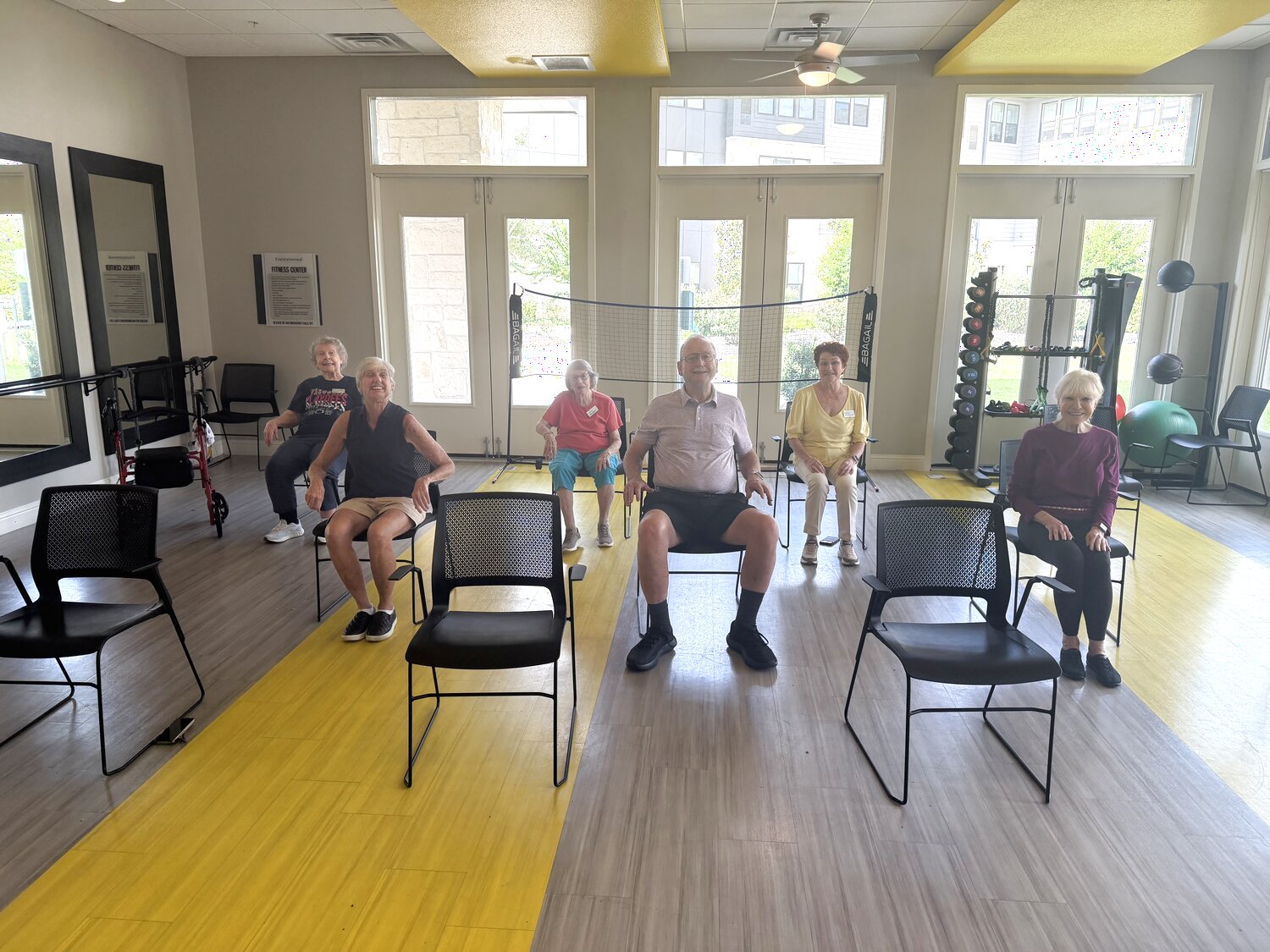
A Chair Fitness class typically includes a gentle warm-up, seated cardio, strengthening and mobility exercises, and a cool-down. Participants follow an instructor's demonstrations and adjust their movement to a comfortable level. No previous fitness experience is required.
Here is what residents and senior living community teams can expect.
Chair Fitness usually takes place in an activity room, multipurpose room, or another accessible community space.
Participants use stable chairs with enough room to move their arms and legs comfortably. Residents should be able to see and hear the instructor, with clear pathways for anyone using a mobility aid.
Before beginning, let the instructor know about movement restrictions or support needs relevant to participation. Community staff can help communicate any guidance from a resident's care team.
Choose comfortable clothing that allows easy movement and footwear appropriate to your needs. Have water available.
Some classes incorporate light weights, resistance bands, or soft exercise balls. Many movements require no additional equipment, so check with your community rather than purchasing anything beforehand.
Exercises vary with the group's abilities and the planned format, but a typical session follows four stages.
Class begins with simple movements to ease into activity. These may include shoulder movements, ankle movements, gentle marching, or comfortable arm reaches. The instructor demonstrates each movement so participants can follow along.
Next, the class may combine rhythmic arm and leg movements, such as seated marching or alternating reaches. Music may accompany the exercises. You do not need to keep perfect time or complete every repetition. The goal is to participate at a manageable pace.
This portion of class uses controlled movements for the upper and lower body. Depending on the session, participants may use body weight or light resistance. The instructor may demonstrate different options, allowing residents to adjust their effort or range of motion.
Class finishes with slower movements and gentle stretches. Participants are encouraged to stay within a comfortable range rather than forcing a stretch or copying a neighbor's movement.
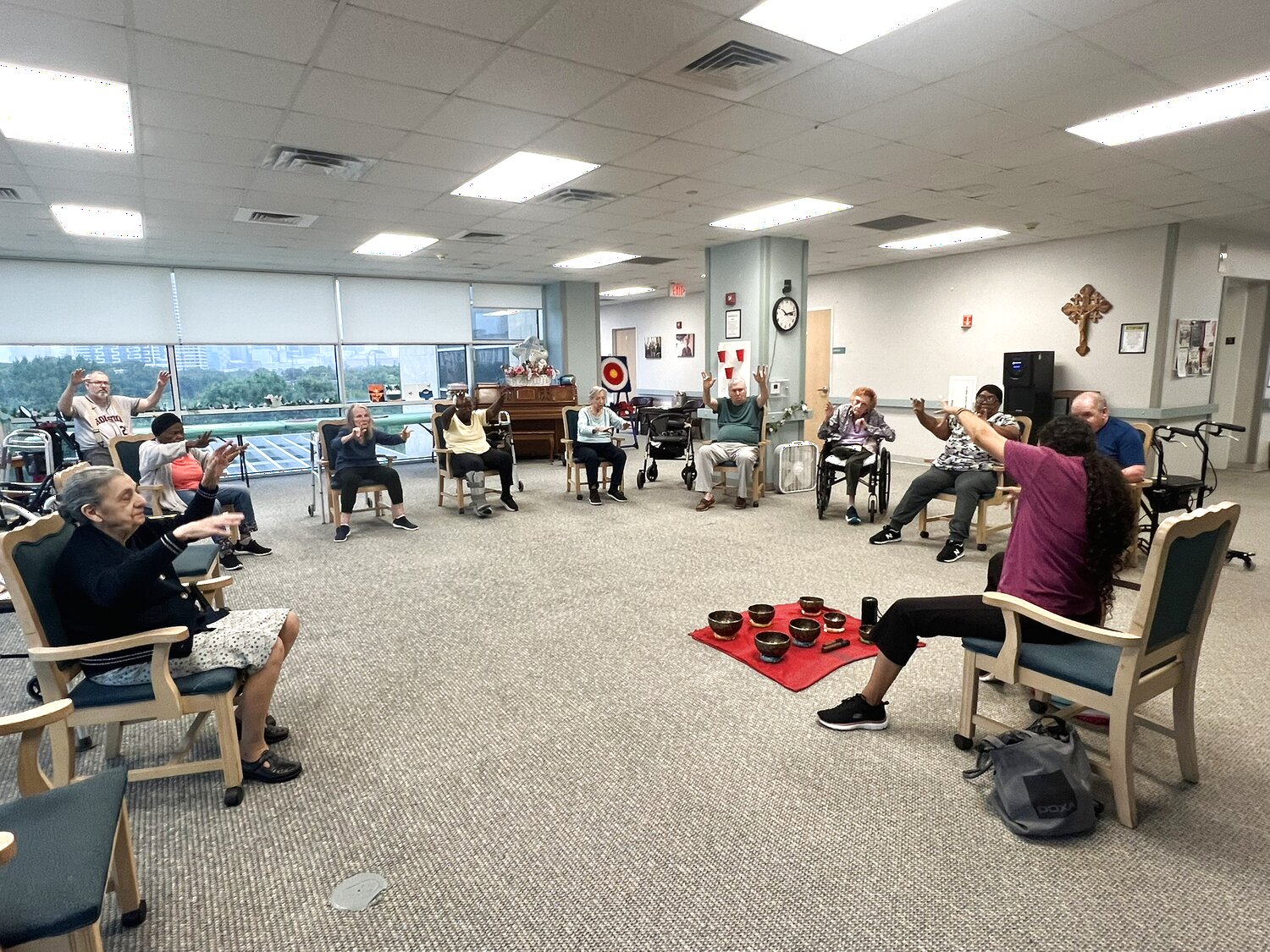
You do not need to match everyone else in the room. During class, you can:
Residents can participate while seated. Standing is not required.
Participation depends on individual abilities, positioning, movement restrictions, and support needs.
The instructor and community team should discuss suitable adaptations beforehand. Residents who need assistance should have the appropriate support available.
For memory care groups, the class format may incorporate simpler instructions, repeated movements, and clear demonstrations, with staff involvement arranged around residents' needs.
You do not have to master every movement on your first visit.
Focus on getting comfortable with the instructor, learning the class rhythm, and finding the options that work for you. Ask questions when instructions are unclear.
Chair Fitness also provides an opportunity to spend time with neighbors and enjoy a shared activity. For some residents, that connection is an important reason to return.
Before introducing Chair Fitness, community staff and the instructor should agree on:
After the first session, resident and staff feedback can help refine the format. Useful questions include whether instructions were clear, the pace felt appropriate, and participants could comfortably see and hear the instructor.
Duration varies with the community's program and residents' needs. Ask your community team about the scheduled class length.
No previous fitness experience is required. Individual suitability depends on your abilities and health needs, so discuss relevant restrictions with your care team and instructor.
No. Residents can participate while seated, without floor exercises.
Yes. Participants can pause, skip an exercise, or rest whenever needed.
Not necessarily. Many exercises use no additional equipment. Your community can explain what, if anything, is provided or needed.
No. Chair Fitness typically combines seated cardio, strengthening, coordination, and mobility work. Chair Yoga emphasizes adapted yoga poses, breathing, stretching, and relaxation.
See how a managed Chair Fitness program runs reliably in your community, led by instructors trained for senior living so every class feels safe and welcoming.
Request a Proposal