
Getting out of a chair, carrying belongings, and reaching for a shelf all involve strength and coordination. A Strength and Functional Fitness class connects exercise to these familiar movements.
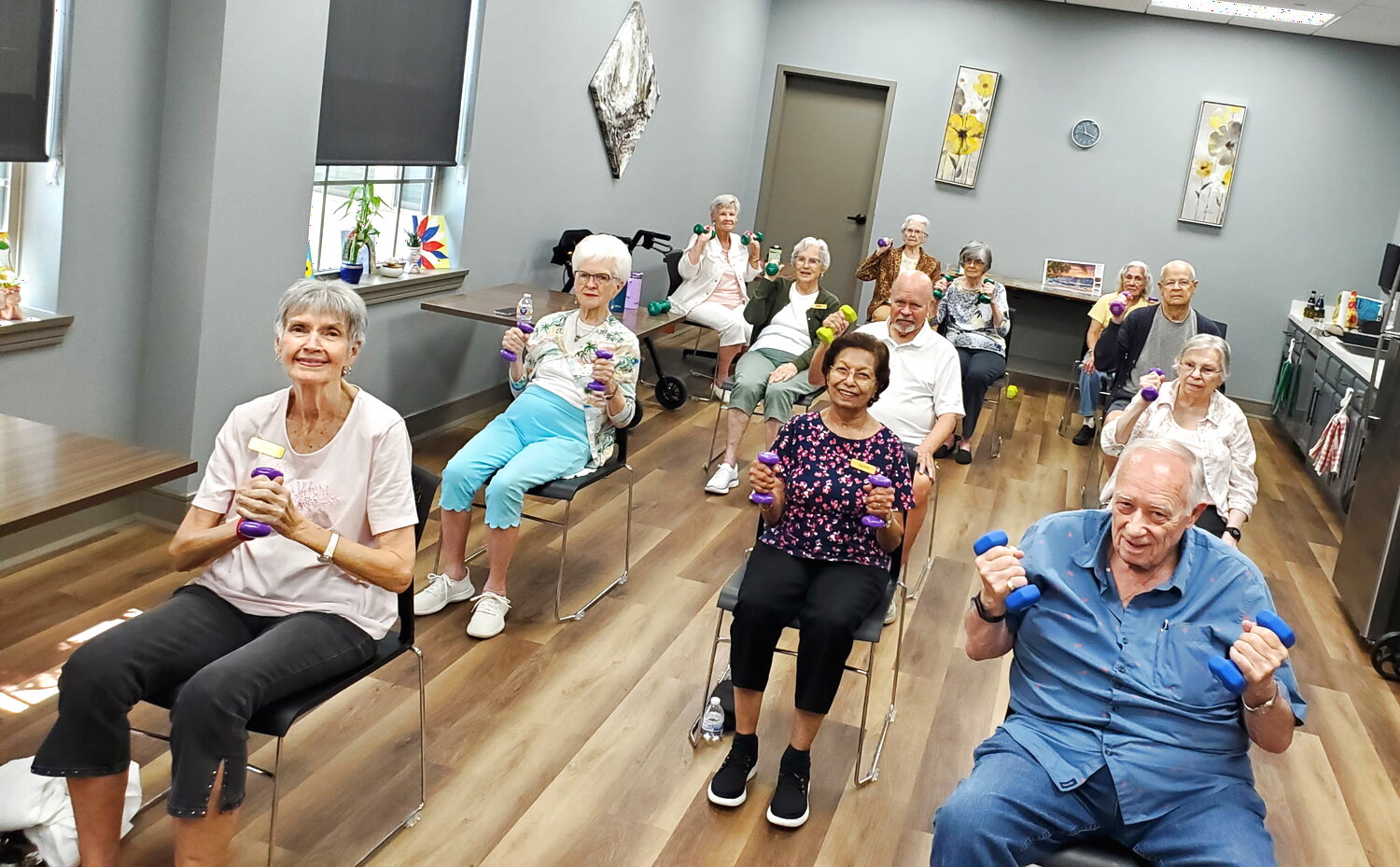
A typical class includes a warm-up, muscle-strengthening exercises, everyday movement practice, and a cool-down. Participants follow guided demonstrations, with seated and standing options selected around their abilities.
If you are considering joining a class, or introducing one at your senior living community, here is what to expect.
Functional fitness focuses on the physical abilities used in everyday life.
Strength exercises work muscles using body weight or resistance. Functional exercises connect that strength to movement patterns, such as standing, reaching, stepping, pushing, and pulling.
For example, a class might include seated leg exercises followed by supported sit-to-stand practice for participants who can safely perform it.
The exercises should provide an appropriate challenge without requiring everyone to use the same movement or resistance.
You do not need previous strength-training experience to get started.
Wear comfortable clothing that allows movement and supportive footwear appropriate to your needs. Have water available, and ask your community whether any equipment is needed.
Before participating, communicate relevant movement restrictions or support needs to the instructor. Residents receiving physical therapy should follow their clinician's guidance about suitable exercises.
Depending on the session, equipment may include:
Some exercises use body weight alone. You do not need to purchase equipment before checking what the community provides.
The exact movements vary with the group, but a typical session follows four stages.
Class begins with comfortable movements to prepare for activity. These may include gentle marching, shoulder movements, ankle movements, or simple reaches. The instructor demonstrates each exercise and explains how to participate.
Next, participants work major muscle groups using controlled movements. Examples may include upper-body exercises involving the arms and shoulders, lower-body exercises for the legs and hips, performed seated or standing, and trunk and posture exercises that practice control and comfortable positioning. Resistance, repetitions, and range of movement can vary between participants. More resistance is not automatically better; the appropriate level depends on the individual.
This portion of class connects exercises to familiar activities. Depending on participants' abilities, it may include standing from a chair and sitting down with control, reaching within a comfortable range, practicing supported stepping, shifting weight with appropriate support, and performing controlled lifting, pushing, or pulling movements. Standing exercises should use an appropriate, stable support arrangement. Residents who need seated participation can work on suitable alternatives.
Class finishes with slower movement and gentle stretching. Participants should stay within a comfortable range rather than force a stretch or try to match someone else.
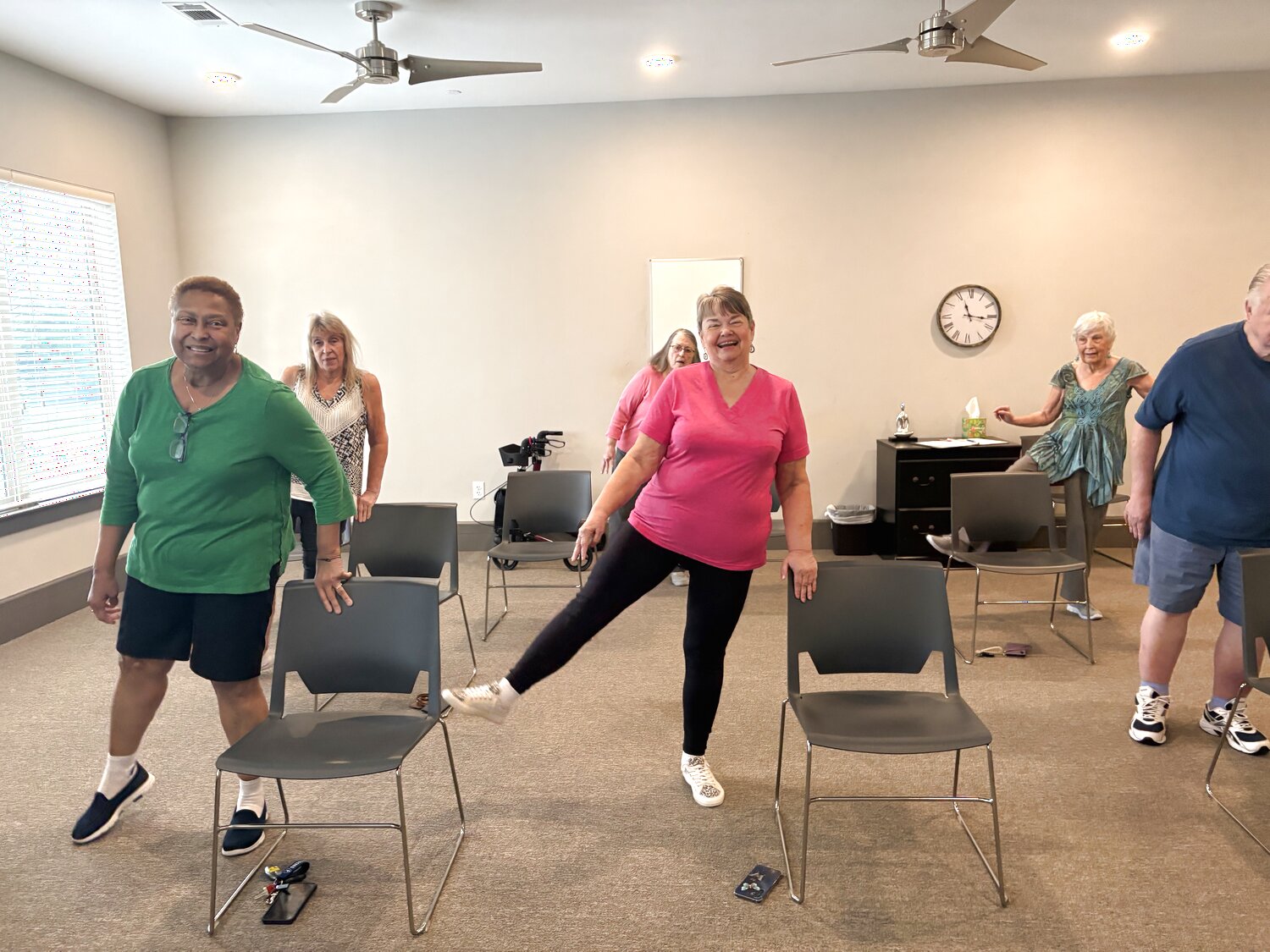
Residents may work on similar exercises while participating differently.
One person might perform an exercise seated without additional resistance. Another might use light weights or a standing variation.
The instructor may adjust seated or standing participation, resistance, range of movement, number of repetitions, and pace and rest periods.
Classes emphasize controlled technique rather than speed. Participants can rest, skip an unsuitable movement, and ask for another option.
Participation depends on individual abilities, positioning, movement restrictions, and support needs.
Many strengthening exercises can be performed while seated, but adaptations should be discussed with the instructor and community team beforehand.
Using a mobility aid does not determine whether every exercise is appropriate. Standing activities require a suitable support arrangement and any assistance the resident needs.
Progress does not have to mean lifting heavier weights.
It might mean becoming more familiar with an exercise, completing a movement with greater control, tolerating more repetitions, or needing fewer breaks.
Changes vary between participants. Class attendance, exercise selection, effort, and individual health all influence the experience.
The aim is to make exercise purposeful and manageable, with challenges adjusted as appropriate.
You do not need to complete every repetition or master the exercises immediately. During your first session:
Getting comfortable with the class is a useful first step. Group participation also creates opportunities to spend time with neighbors and encourage one another.
Before scheduling a class, community staff and the instructor should agree on:
After the first class, feedback can help refine the format. Ask whether residents could follow the demonstrations, whether the pace was manageable, and which exercises they found engaging.
Classes can accommodate beginners through simpler movements, lighter resistance, and fewer repetitions. Individual suitability depends on the resident's abilities and health needs.
No. Many strengthening exercises can be performed while seated. Standing activities are included when appropriate, with suitable alternatives for residents who need them.
No. Body weight, light weights, or resistance bands may be used. The appropriate resistance depends on the participant and the exercise.
Chair Fitness is performed primarily while seated and often combines cardio, strength, coordination, and mobility work. Strength & Functional Fitness places greater emphasis on strengthening and everyday movement patterns, with seated and standing options.
No. Strength & Functional Fitness is a group wellness class. Physical therapy involves individualized evaluation and treatment by a licensed healthcare professional.
Strength and controlled movement can complement balance-focused programming, but this class should not be treated as a complete fall-prevention program. Ask the community team about appropriate balance programming and individual support.
Pause and ask the instructor for an appropriate alternative. You may be able to reduce resistance, use a smaller range of movement, perform fewer repetitions, or participate while seated.
See how a managed program delivers Strength and Functional Fitness classes residents can follow, run reliably by instructors trained for senior living. Learn more about our Strength & Functional Fitness program.
Request a Proposal